

How Much Paint Do I Need to Paint My Car?
Someone walks into the shop carrying a faded fender off a 2008 Camry, or calls on a Tuesday morning about a Silverado bed they want to respray, and the question is almost always the same: how much paint do I actually need? It sounds like it should have a simple number attached to it. After forty years of sizing paint jobs across the counter, the honest answer depends on what you are painting, what color you are spraying, and whether you are running a basecoat-clearcoat system or a single-stage urethane and the one thing you never want is to be a quart short with a car half-painted in your garage. Here is how we size it.
How much paint do I actually need to paint my whole car?
For a standard sedan sprayed in a basecoat-clearcoat system, plan on one gallon of color and one gallon of clearcoat you will probably use about three quarts of each if you spray cleanly, but the extra quart is cheap insurance. A compact can get away with three quarts of each; a full-size truck, van, or SUV should plan on a gallon and a half of each, and a dualie or a lifted body with fender flares can run two gallons.
About a third of what you mix goes somewhere other than the car. Overspray drifts past the edges of the panel, material gets left in the cup when you break down the gun, and tack coats lay down intentionally light. That loss is already baked into the gallon rule of thumb. It is also why painters who claim they sprayed a whole sedan out of three quarts either cut corners somewhere or measured their coverage after the job was done, not before they started.
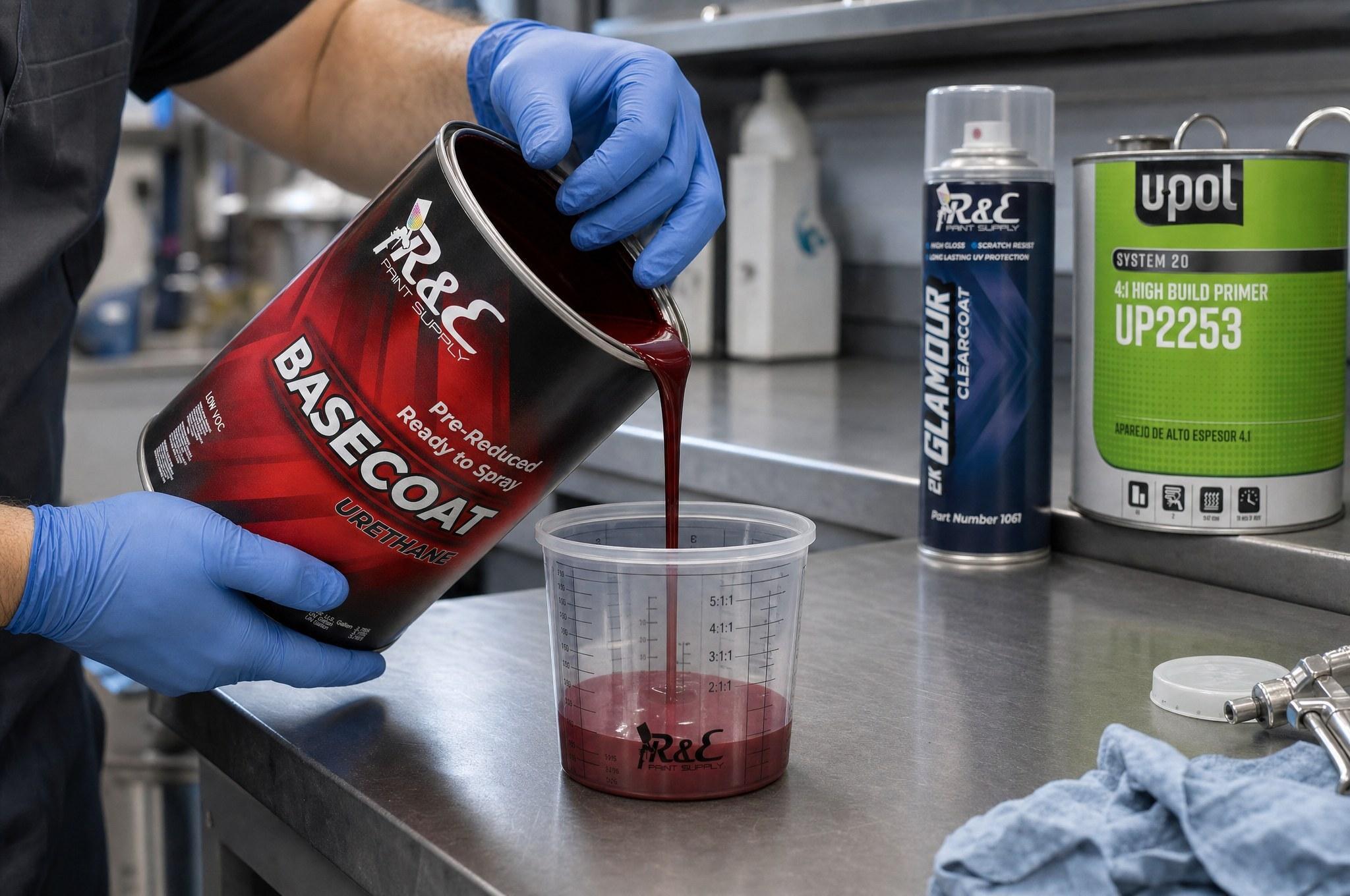
Single-stage urethane changes the math. Because there is no clearcoat layered on top to carry the gloss and the UV protection, the color itself has to do all the work plan on about a gallon and a half for a full sedan, because each coat needs more body. If you are spraying a factory color we can match from your factory paint code, our R&E Automotive Paint catalog lets you drill down by year, make, and model to the exact OEM color, and the same color is offered in sizes that tie to the scale of the job: Touch up kits l for a chip or small scratch, Aerosol for small part repairs, or a pint or quart for a 1-2 panel spray, and gallon for a full car. That sizing ladder exists exactly so a customer spraying a door does not have to buy a full gallon, and a customer spraying a full car does not have to stitch together four quarts.
On the clearcoat side, a proprietary option worth knowing is our R&E 2K Glamour Clearcoat. We stock it in multiple sizes, and a quart is often exactly right for a hood, a roof, or a set of doors. Because it is a two-component activated clearcoat, the gloss and the chemical resistance are on par with what a body shop shoots.
Coats of basecoat and clearcoat how many a full respray really takes
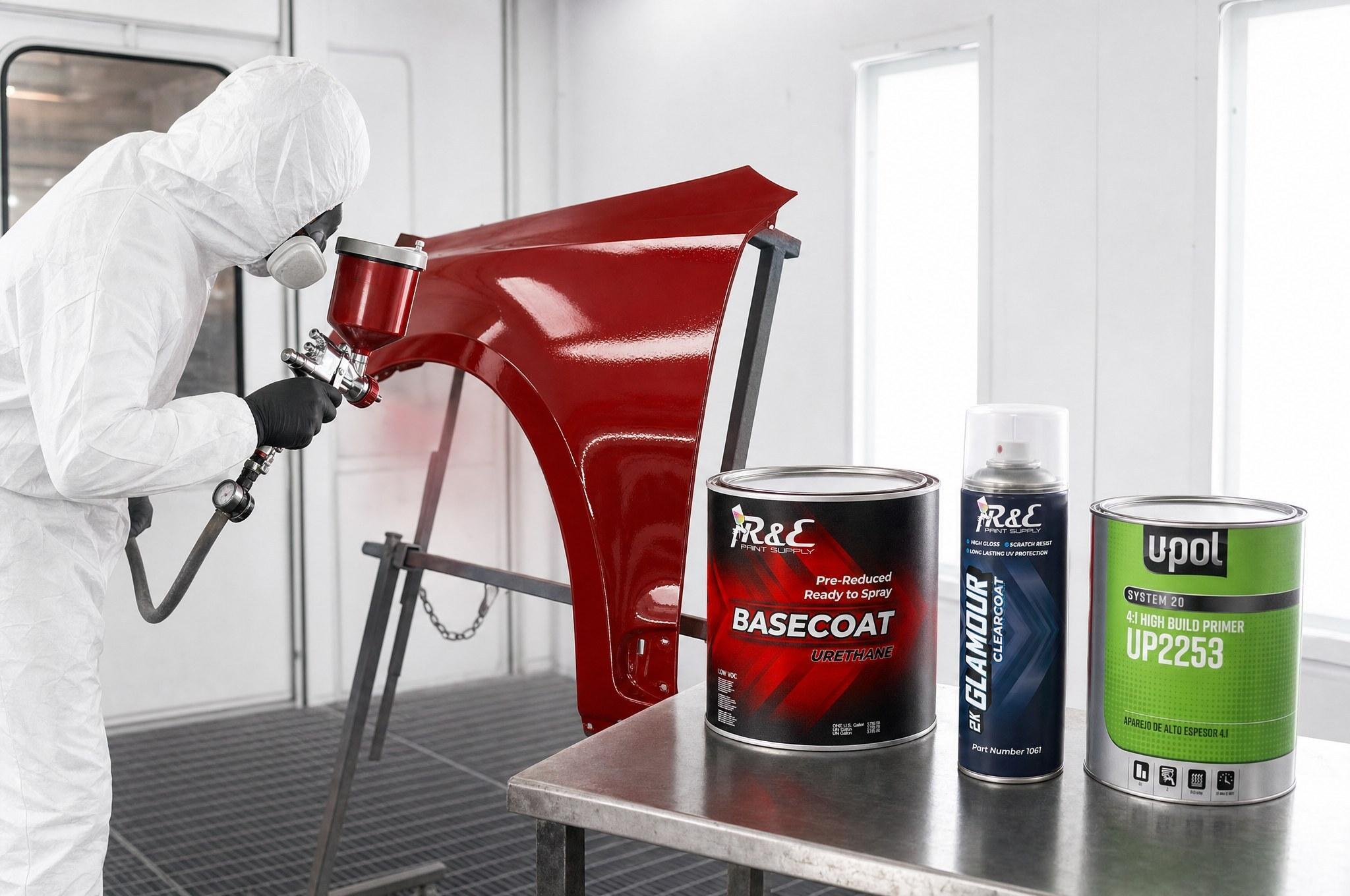
A full respray typically takes two to three coats of basecoat and two to three coats of clearcoat never fewer, rarely more. The target is roughly one mil of basecoat film thickness and two to three mils of clearcoat, which is where the finish has enough depth to polish, enough protection to last a decade, and thin enough individual coats that the solvent flashes out cleanly between layers.
Three medium coats beat two heavy ones every time. A heavy coat traps solvent under the surface, which is how you end up with a soft, hazy clearcoat that still feels tacky two days later — and if you are unlucky, a solvent pop or a full-on run that eats your Saturday. Three medium coats also let each layer tack up at the edges before the next one lands, which is how metallic flake orients evenly and how clearcoat builds without orange peel. Flash times matter: give basecoat five to ten minutes between coats at 70°F, and clearcoat whatever the technical data sheet specifies, usually ten minutes between coats and twenty before you move the car into a drying environment.
Here is the quart-level math for the practically minded: one quart of basecoat covers roughly 75 to 100 square feet per coat depending on how well the color hides. A sedan exterior is about 175 to 200 square feet of paintable surface. Three quarts of basecoat, sprayed as three coats, covers that cleanly with a margin for overspray. The same one-quart-per-hundred-square-feet-per-coat rule roughly applies to clearcoat, which is why the full-car gallon planning number lines up when you do the multiplication. If a coat takes noticeably less material than that, you were probably too dry; if it took significantly more, you were probably too wet.
Why color choice changes the amount of paint you need
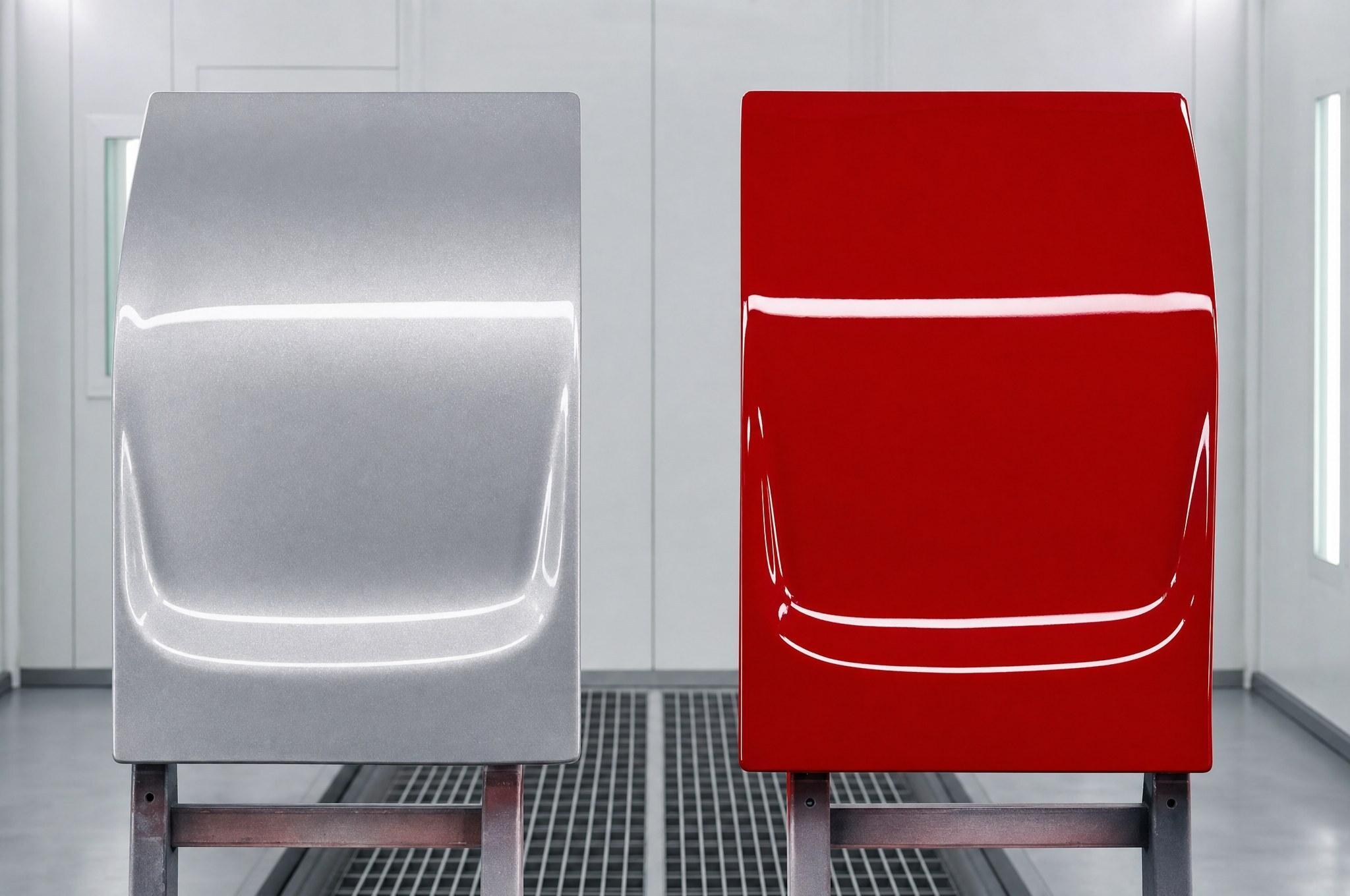
Yes — color coverage varies more than most first-time painters expect, and this is where an under-ordered gallon suddenly becomes a mid-job emergency. Light colors, tri-coat pearls, and bright whites can demand four or more coats to cover a dark surface; darker solids like black, deep blue, or burgundy usually reach full hide in two.
Picture a gray primer base with a yellow single-stage going over the top. You will see primer through coat one, coat two, and sometimes coat three before the yellow actually looks like yellow from a few feet away. A tri-coat pearl is a different animal entirely, because a tri-coat is three layers of material by design: a solid ground coat, a pearl mid coat, and clear on top. The mid coat alone is a whole additional half-gallon of product you did not plan for if you thought you were ordering a conventional basecoat-clearcoat car.
The fix for most of this is a value-matched sealer. Sealer is a thin, uniform layer sprayed between primer and basecoat that shifts the substrate color closer to the basecoat color a gray-scale sealer matched to your color's value will often cut your basecoat demand by an entire coat. For any light color over a dark primer, we strongly recommend sealing the panel first. It is cheaper than two extra quarts of basecoat, and it dramatically reduces the risk of a thin coat ghosting through on a panel edge.
Metallics and pearls spray a little wetter and more deliberately than solids, because flake orientation depends on technique. You will not necessarily use more material than a solid of the same value, but you will be more sensitive to gun distance and fan pattern, which can tempt a nervous painter into an extra "insurance" coat. Order paint by how the color behaves, not only by the square footage of the car.
Primer, sealer, and reducer the supplies most painters forget to buy
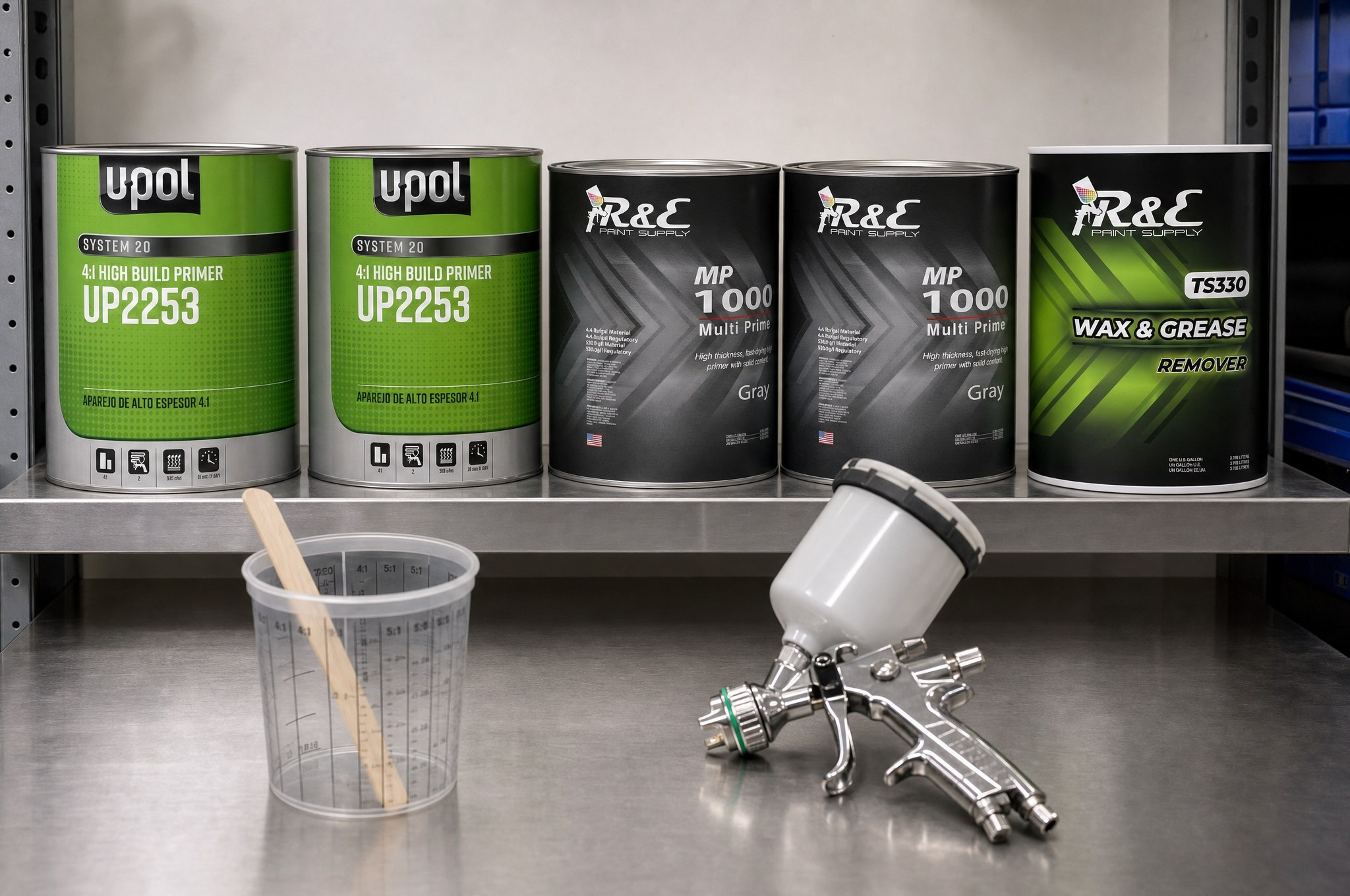
A full respray almost always needs a gallon of primer-surfacer, one to two quarts of sealer, and reducers and activators sized to each paint system's specific mix ratio. These are the quantities DIY painters forget when they are focused on the color, and running out mid-job is the fastest way to ruin a day in the garage.
A 2K high-build primer like U-POL 2253 4:1 Gray High Build Primer is what you want for block-sanding a car straight. Figure two or three coats of primer on the bodywork, which is comfortably a gallon for a sedan. If the car is structurally sound and you are spraying over existing factory paint that has been scuff-sanded, you may only need an epoxy sealer, and a quart is usually enough a lot of panel-respray jobs never touch a high-build primer at all.
Reducer and activator quantities come straight off the technical data sheet for whatever paint system you chose. A 4:1:1 basecoat mix (four parts color, one part activator, one part reducer) turns one gallon of color into one and a half gallons of sprayable material, so your activator and reducer each need to be about a quart per gallon of color. Clearcoat is usually 4:1 color-to-activator, which puts a quart of activator alongside a gallon of clear. Order them at the same time you order color the exact activator speed depends on your shop temperature, and nobody stocks every hardener shade for every clear.
The last thing on this list gets skipped constantly: R&E TS330 Wax and Grease Remover. A gallon is the standard shop jug and will carry you through a full project with plenty of margin, and it is step one of every paint job. No matter how clean the car looks, it has silicone from tire shine, wax from the last detailer, or fingerprint oils from the assembly line still sitting on the surface. Skip this and you will chase fish-eye craters through every coat you spray.
Sizing paint for a single panel, bumper, or touch-up
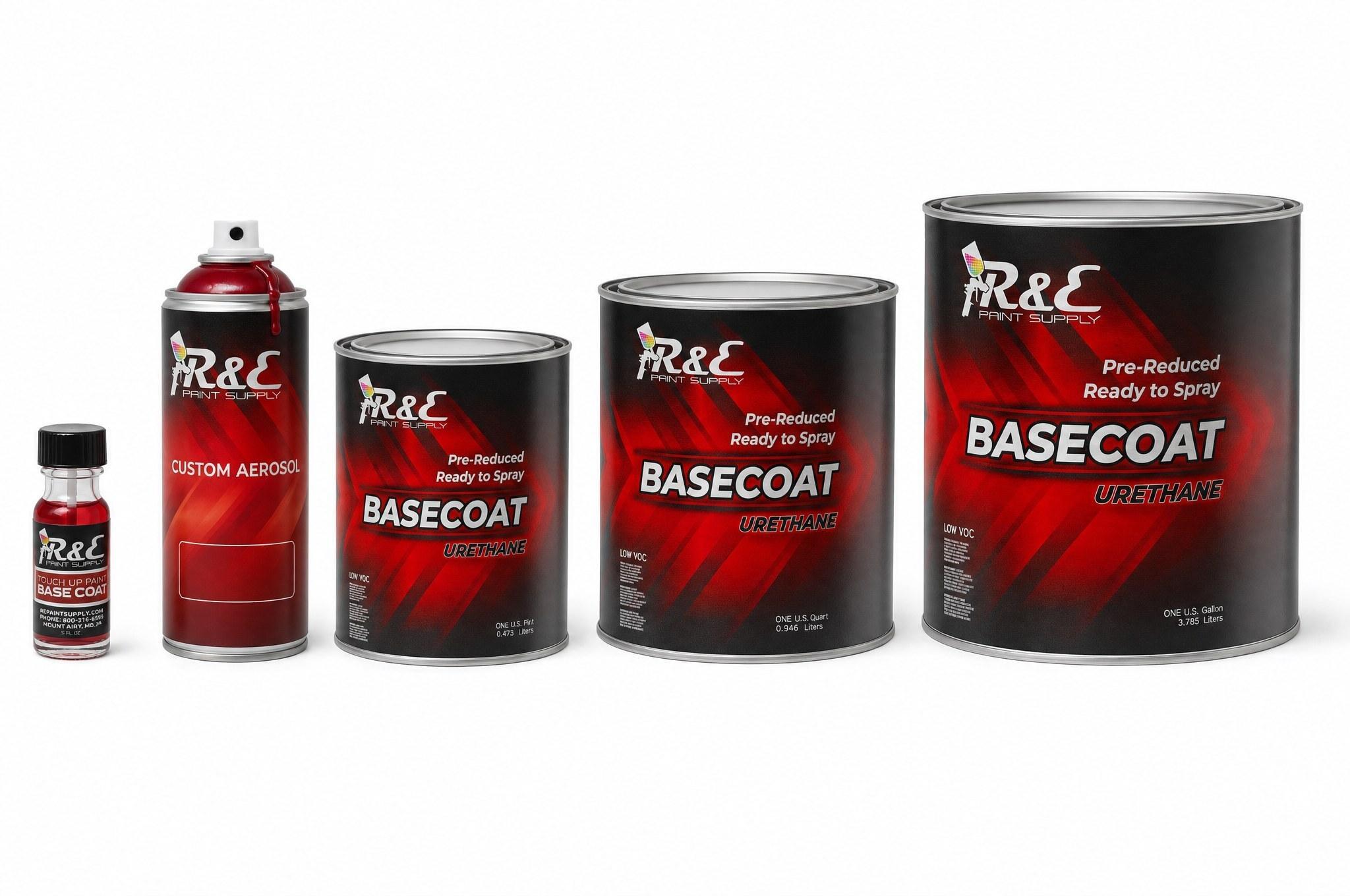
For a single panel or bumper, plan on one pint of basecoat and one quart of clearcoat enough to spray two to three coats with a little blending margin into the adjacent panels. For smaller repairs, the size ladder goes all the way down to a touch up bottle with a brush in the cap, which is the right tool for a dime-sized chip.
The practical way most customers pick a size is to match the paint volume to the repair scale:
- Rock chip or small scratch: touch-up bottle with the brush in the cap, or a dedicated applicator pen
- Small area, 3–4 inches across: an aerosol or a ½ pint, of basecoat
- Single panel door, fender, hood: a pint of color plus a quart of clearcoat
- Two panels with a blend: two quarts of each, because the blend zones consume material too
- Three or more panels: start talking gallons, not quarts
That ladder is exactly how our R&E Automotive Paint catalog is organized drill down by year, make, and model to find your factory color, then pick the size that fits the job so you are not forced into a full-gallon order for a bumper repair. If you do not have a spray gun setup at all and need a real clearcoat on a small job, SprayMax 2K Urethane Glamour Clear Coat is the one aerosol most pros respect. You pierce the activator at the bottom of the can and it mixes a real two-component urethane that cures hard and polishes well. It will not replace a gun for a full car, but for a bumper, a repaired rocker, or a single fender, it is honest work and we keep it in stock for exactly that reason.
The complete paint shopping list for a full respray
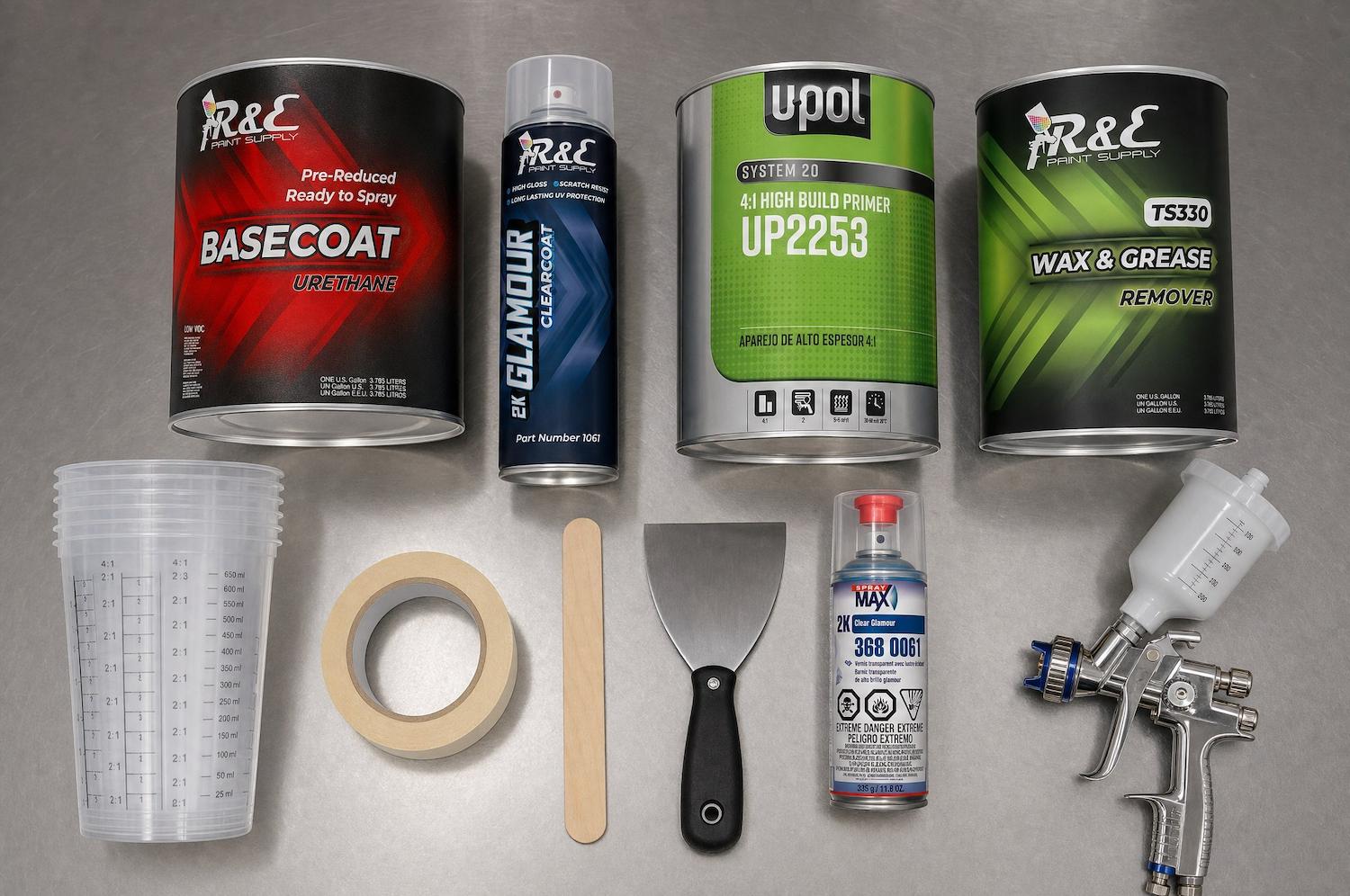
For a full-respray sedan, the complete list runs about one gallon of color, one gallon of clearcoat, one gallon of primer-surfacer, 2 quarts of sealer, one quart of wax and grease remover, and the activators and reducers the paint system calls for. That is the paint side of the shopping list sandpaper, masking paper, mixing cups, and a respirator live in our prep and safety guides.
Size up from that sedan list for a truck or SUV (plan on a gallon and a half to two gallons of color and clearcoat), down for a compact or a single-panel job (scale everything to the surface area), and sideways for a single-stage color (a gallon and a half of color, no clearcoat, same primer and sealer). Order reducers and activators at the same time as the color so you do not discover on the morning of the job that your paint system needs two different hardeners and you only have one on the shelf.
Two habits are worth building before you place a major order. First, measure the paintable surface of your car a quick tape measure of the hood, doors, roof, quarters, and fenders will get you inside 10% of the true number, and that is enough for coverage math. Second, call the shop before you click "buy" on a full paint job. We have spec'd paint quantities for forty years across every vehicle size that drives on an American road, and we are happy to walk you through the quantities for your specific project before you spend the money. That single phone call is the cheapest coat of paint you will ever buy.